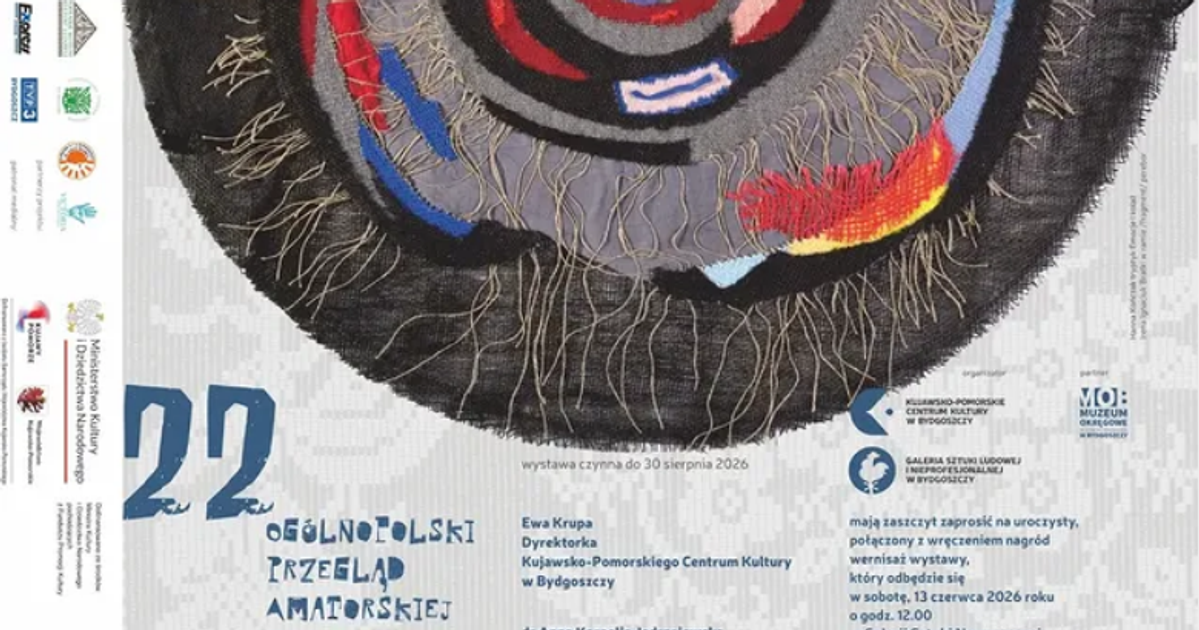
The National Review of Amateur Unique Textile Art is one of Poland's most important events dedicated to contemporary textile art created by non-professional artists.
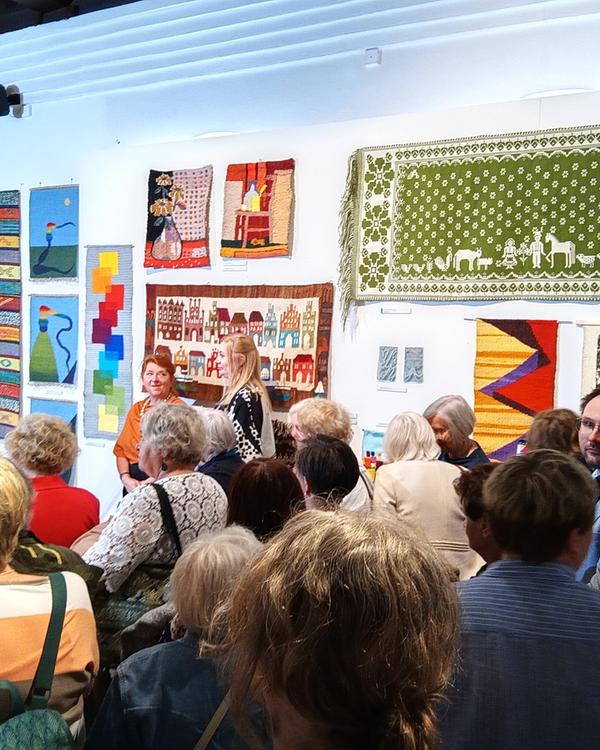
Organised every two years by the Kuyavian-Pomeranian Centre for Culture, the exhibition has, for more than forty years, showcased a broad spectrum of weaving techniques and artistic approaches, ranging from textiles inspired by traditional folk weaving to contemporary experimental works.
For the 22nd edition, the jury selected around 200 works by nearly 150 artists from across Poland. Nineteen prizes and twenty-nine Honourable Mentions were awarded. The post-competition exhibition opened at the Modern Art Gallery of the Leon Wyczółkowski Regional Museum in Bydgoszcz, with the awards ceremony taking place during the exhibition opening.
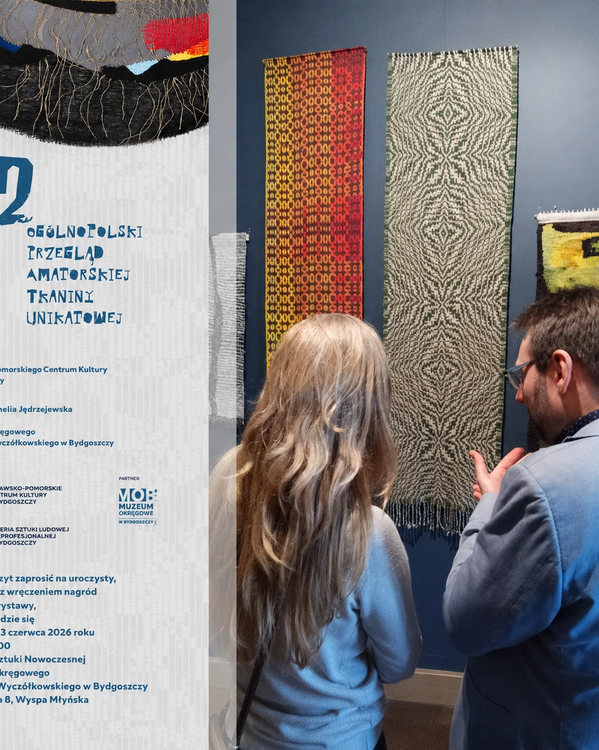
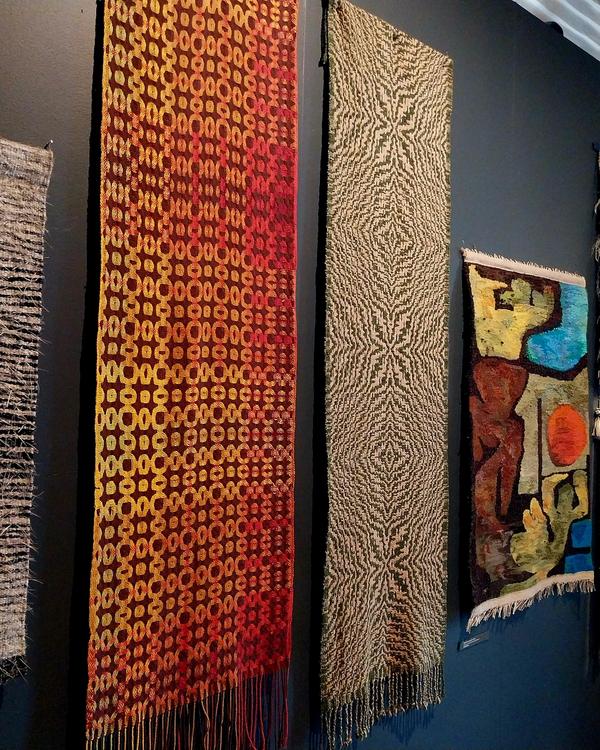
Two of the three works I submitted—Chromatography (left) and Scindapsus (right)—received separate Honourable Mentions from the jury.
Both textiles were woven using the Deflected Double Weave technique on a hand-operated multi-shaft loom.
Chromatography was woven in cotton. The work was inspired by the visual patterns created during the separation of photosynthetic pigments and other coloured compounds extracted from plants using thin-layer chromatography (TLC). It is a direct reference to biotechnology, the field in which I received my academic education.
The colours we perceive in leaves, stems and flowers rarely originate from a single pigment. The green of chlorophyll coexists with the yellows and oranges of carotenoids and xanthophylls, while the purple hues of many flowers are produced by anthocyanins. What our eyes perceive as a single colour is, in reality, a complex mixture of many compounds. Only chromatographic separation reveals the hidden richness and structure of these colours.
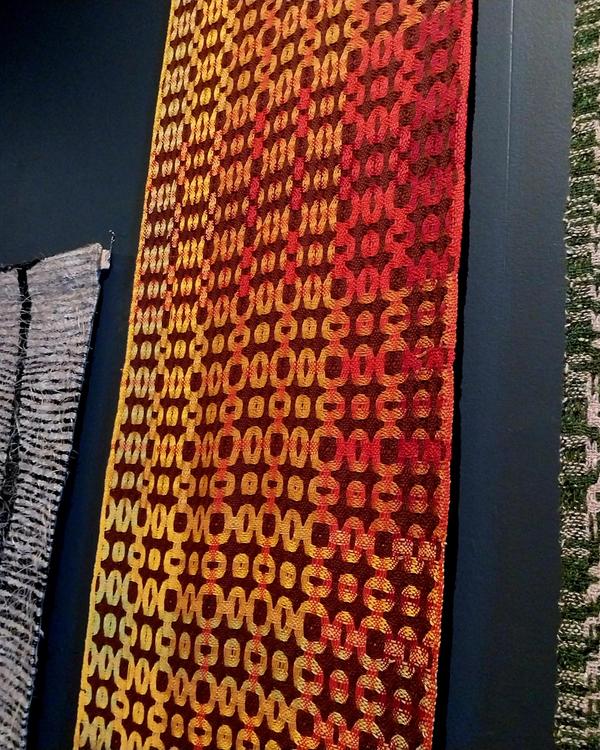
Although Chromatography was conceived as an artistic textile, the same approach to colour, structure and rhythm also informs the handwoven scarves, neck warmers and interior textiles I create. For me, the boundary between art and craft is a fluid one.
Scindapsus explores the broad creative potential of the Deflected Double Weave technique—the same technique I use when designing my handwoven scarves and mufflers. It allows me to create three-dimensional, organic forms and rhythmic structures whose appearance changes depending on the viewing angle and the way the textile naturally drapes.
The starting point for the design was a motif often associated with butterfly wings. Here, however, I used it to evoke the leaves growing around the stem of a Scindapsus plant—a familiar houseplant that has been part of my childhood memories for as long as I can remember.
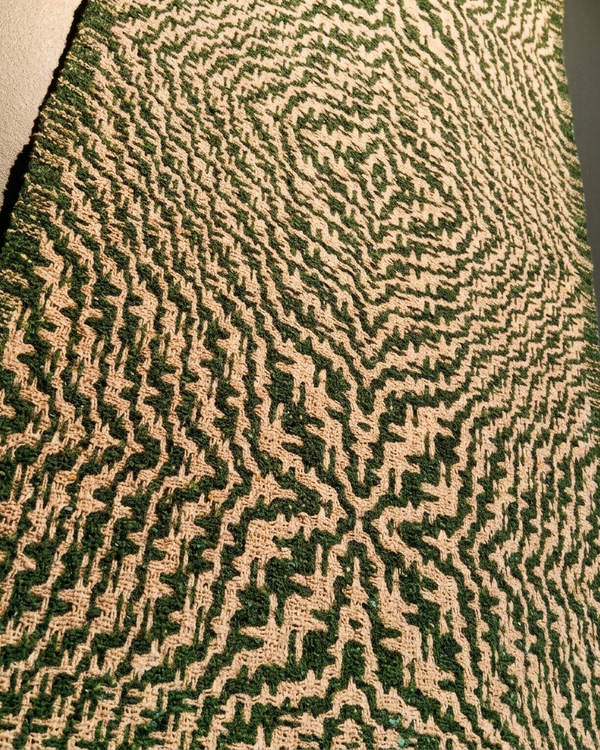
Scindapsus was woven from Donegal Merino wool. Its colour palette was carefully selected to echo the distinctive variegated foliage of the Scindapsus plant, with its mosaic-like patterns of greens, creams and subtle contrasts. Observing nature and translating its rhythm, structure and colour into the language of handwoven textiles became the central inspiration behind this work.
Both textiles are on display at the exhibition at the Modern Art Gallery of the Leon Wyczółkowski Regional Museum in Bydgoszcz until 30 August 2026.