Why Some Wool Itches — and Some Doesn't
Wool has a reputation for being itchy.
I don't think that's entirely fair.
Many of us remember wearing woollen jumpers that felt scratchy against the skin. It's an experience that has shaped the way people think about wool. But the fibre itself isn't the problem.
Textile science has a name for that familiar sensation: prickle. It describes the feeling of many tiny pinpricks caused by fibres pressing against the skin. Whether a fabric feels comfortable depends on several factors, including fibre diameter, yarn construction and the way the fabric itself is made. ¹²
The comfort of a wool fabric depends on more than the fibre alone. Fibre diameter is the single most important factor, but the quality of the fleece, the way the yarn is spun and twisted, the structure of the cloth, and even the thickness of the yarn all influence how the finished textile feels against the skin.
Ultimately, it comes down to something surprisingly simple: how many fibre ends protrude from the surface of the cloth, and how stiff they are. Those tiny fibre ends are what create the sensation we call prickle. The same principle applies to other fibres too — wool is simply the material most commonly associated with it. ¹²
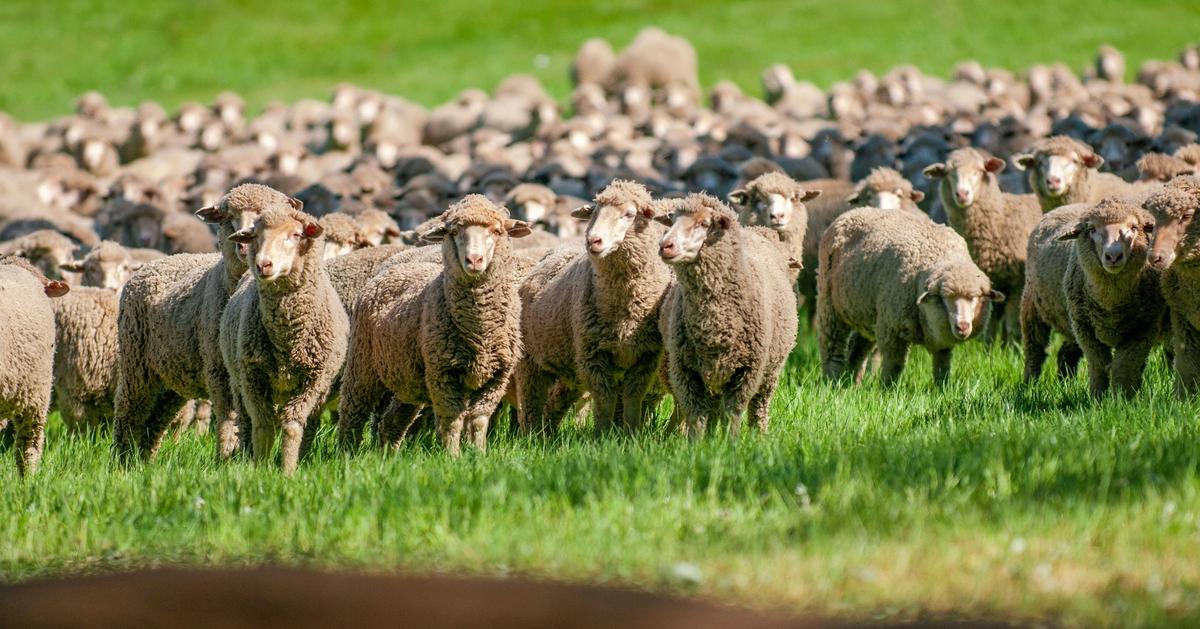
Merino is different because its fibres are remarkably fine. To illustrate that difference, I've included a few dark-field microscope photographs comparing merino with a coarser wool. Although both come from sheep, the contrast in fibre diameter is immediately visible.
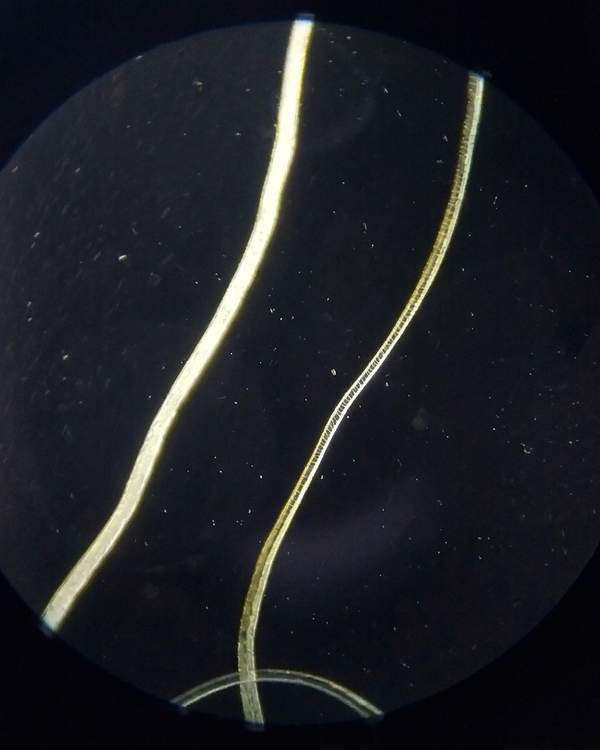
non-Merino (left), Merino (right)
For textiles worn next to the skin, that difference matters. Research consistently shows that fibre diameter is the single most important factor influencing the sensation of prickle. Finer fibres bend more readily when they come into contact with the skin, making the fabric feel noticeably more comfortable to wear. ¹²³
Comfort, however, is only part of the story.
Merino can absorb moisture vapour while remaining dry to the touch, helping regulate humidity next to the skin. It is naturally breathable, helps maintain a comfortable body temperature in changing conditions, and tends to retain odours less readily than many synthetic fibres. These qualities are among the reasons why it has remained one of the world's most valued natural fibres. ¹ Knowing that merino was the right fibre for the textiles I wanted to weave was only half the decision.
The next question was: which yarn?
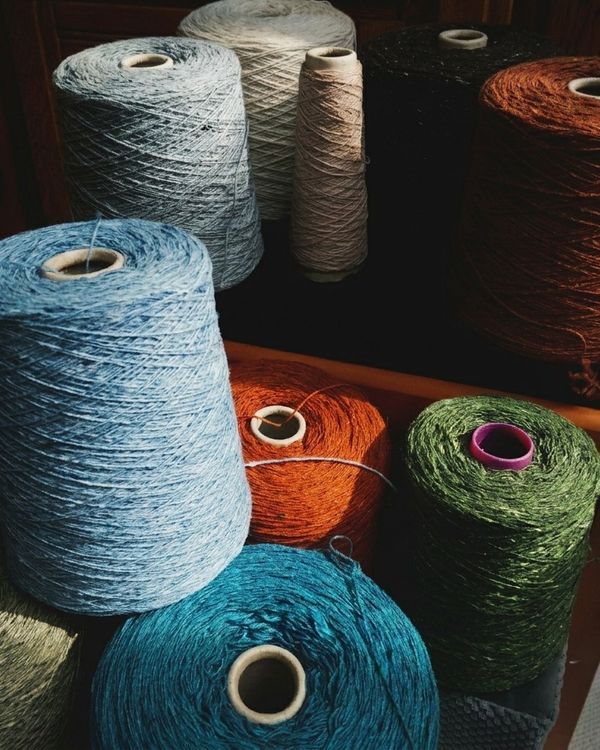
After trying different options, I settled on Donegal Merino, spun in the village of Kilcar on Ireland's north-west coast. The wool is sourced from carefully selected merino flocks in Ireland, Australia and New Zealand, but what drew me to this yarn wasn't its origin. It was its character. Donegal isn't a perfectly uniform yarn.
That's exactly why I chose it.
It is beautifully irregular, with subtle variations in thickness and the distinctive coloured flecks that have become synonymous with Donegal Tweed. Rather than hiding the natural character of the fibre, it embraces it.
This is the yarn I use for every woollen textile that leaves my loom.
Choosing a yarn is no less important to me than choosing a weave, a colour palette or a composition. Every decision shapes the cloth long before the first shuttle is thrown.
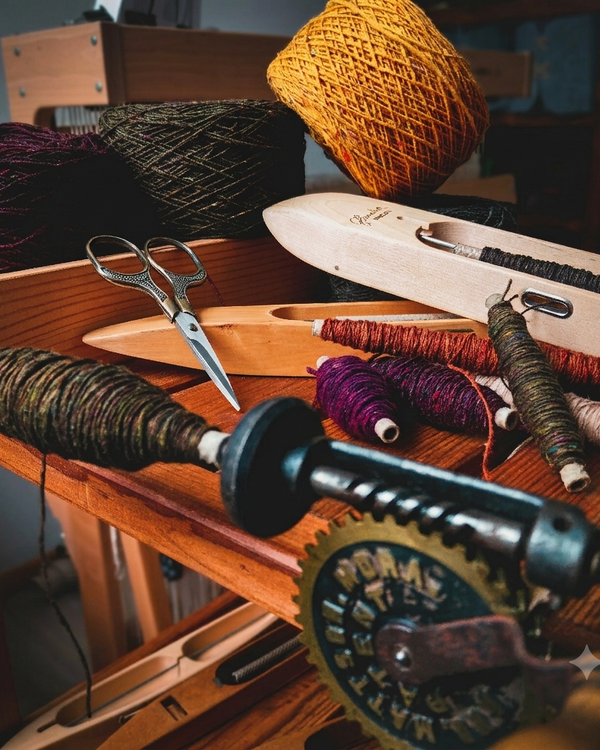
Hand-wound bobbins
I weave scarves, shawls and other textiles from merino because I want the material to be as thoughtful as the design itself - view collection here. Beauty alone has never been enough for me. My textiles should not only look distinctive, but also feel good to wear, age gracefully and become objects people return to year after year.
For me, that is every bit as important as the weaving itself.
References
¹ Doyle, E.K., et al. (2021). The science behind the wool industry: The importance and value of wool production from sheep. Fibers, 9(5), 32.
² McGregor, B.A., Naebe, M., Stanton, J., Speijers, J., Beilby, J., Pieruzzini, S., & Tester, D. (2013). Relationship between wearer prickle response with fibre and garment properties and Wool ComfortMeter assessment. The Journal of The Textile Institute, 104(6), 618–627.
³ McGregor, B.A., Naebe, M., Wang, H., Tester, D., & Rowe, J. (2014). Relationships between wearer assessment and the instrumental measurement of the handle and prickle of knitted wool fabrics. Textile Research Journal.